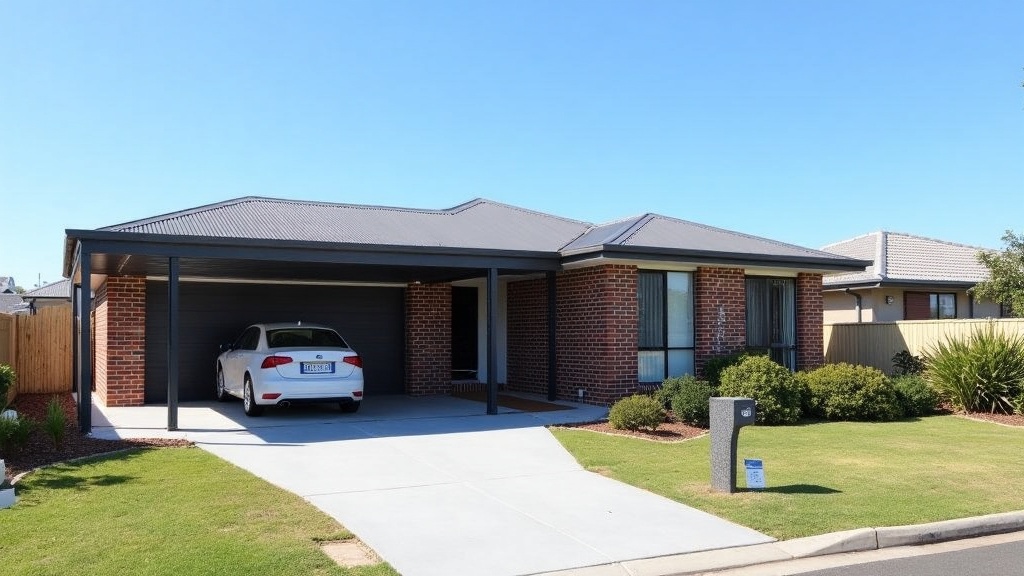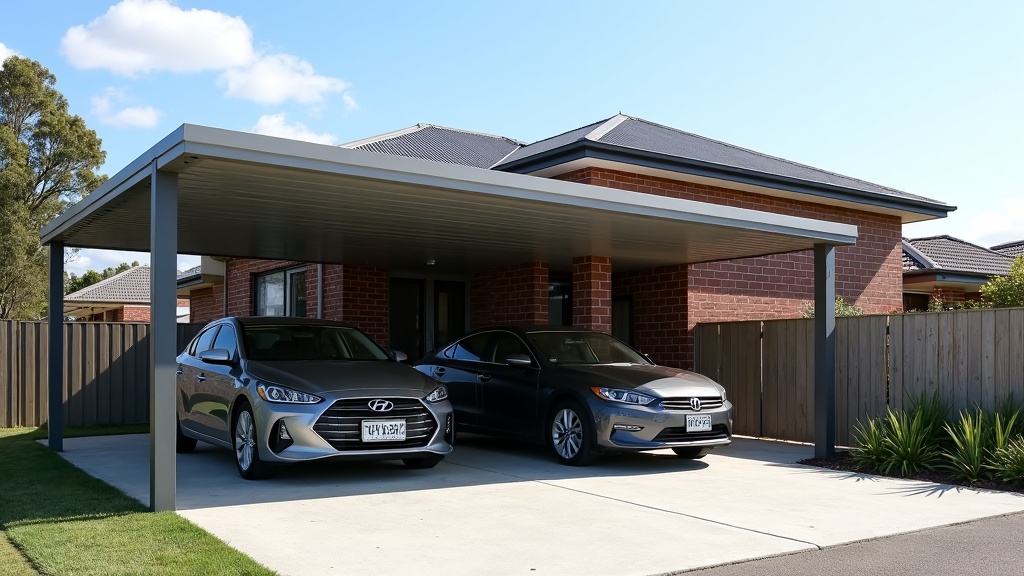
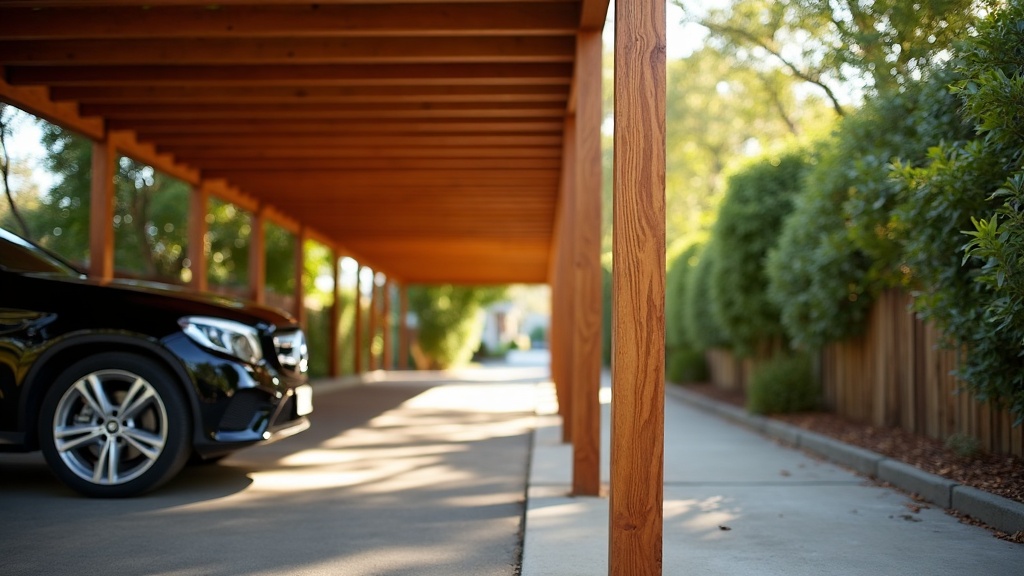
A timber carport looks fantastic when it goes up and can look tired surprisingly fast if it is left to fend for itself. Melbourne’s swing from baking summer afternoons to wet, grey winters is hard on exposed timber, and the posts sitting near the slab cop the worst of it. The good news is that a timber carport that gets looked after will outlast one that does not by years. Here is how to keep yours in good shape.
Why timber carports weather faster than people expect
Timber moves. It swells when it is wet, shrinks when it dries, and that constant movement opens up tiny checks and cracks where water and UV get in. A carport is fully exposed on at least one side, often with no walls to shelter it, so it takes the full force of sun and rain. UV breaks down the surface, moisture feeds rot and mould, and the cycle speeds up wherever water is allowed to sit. None of this means timber is a bad choice — it just means the finish is doing real work and needs to be kept up.
Stain vs paint: which protects timber better outdoors
Both stain and paint protect timber, they just do it differently. Paint sits on top as a film and gives strong UV and moisture protection, but when it eventually fails it tends to crack and peel, which means scraping back before you recoat. Stain soaks into the timber, lets the grain show, and usually weathers by fading rather than peeling, so recoats are simpler — but a stain generally needs refreshing more often. Which suits you comes down to the look you want and how much ongoing maintenance you are willing to do. Whichever you pick, the product has to be rated for exterior exposure.
Recoating: how to tell when it’s due
Rather than work to a fixed calendar, read the timber. Signs a recoat is due include the colour fading or going patchy, the surface feeling rough or chalky, water no longer beading and instead soaking in, and any greying or spotting where the finish has worn thin. The exposed, sun-facing faces will always go first, so judge by the worst areas. How often this comes around depends on the exposure and the specific product, so follow the coating manufacturer’s guidance rather than a rule of thumb.
Protecting posts at the slab (the spot that rots first)
If a timber carport is going to fail, it usually starts at the base of the posts where they meet the slab. Water pools there, splashes up off the concrete, and wicks into the end grain — and that is exactly where rot takes hold out of sight. Keep the base clear of leaf litter and soil, make sure water drains away from the posts rather than ponding around them, and keep the coating intact right down to the bottom. Many builders set timber posts on stirrups or brackets that lift the timber off the slab for this very reason; if yours sit straight on the concrete, keep an especially close eye on them.
Cleaning and prep before any recoat
A finish is only as good as the surface under it. Before recoating, give the timber a proper clean to get rid of dirt, mould and any loose, flaking finish — a gentle wash and a scrub will handle most of it, with a suitable timber cleaner for stubborn mould. Let it dry out fully, because coating over damp timber traps moisture and the finish will not bond. Light sanding to knock back rough or glossy areas helps the new coat key in. Skipping the prep is the most common reason a fresh coat fails early.
When to call a professional painter vs DIY
Cleaning and a maintenance recoat are within reach for a confident DIYer. It is worth bringing in a professional when the existing finish is failing badly and needs stripping back, when there is rot to assess, or when you want a paint system that will go the distance. Exterior timber needs the right preparation and the right product for its exposure, and a painting and decorating team like Barton’s Painting and Decorating can spec a coating system suited to how much sun and rain your carport actually copes with. Done once, properly, it saves repeating the job too soon.