If you are weighing up a carport, a pergola, a new garage or a fresh driveway for your Melbourne home, you are really asking the same handful of questions: which structure suits my block, what will it cost me in upkeep, do I need a permit, and how do I make it look like it belongs with the house? This guide walks through all four projects side by side so you can see where each one fits before you talk to a builder.
The four projects most Melbourne homeowners weigh up
Carports, pergolas, garages and driveways often get planned together because they share a footprint at the front or side of the home. The right mix depends on how you use the space: shelter for the car, somewhere to sit outside, secure storage, or simply a hard-wearing surface that lifts the look of the street frontage. It helps to treat them as one connected project rather than four separate decisions.
Carports at a glance — when a carport is the right call
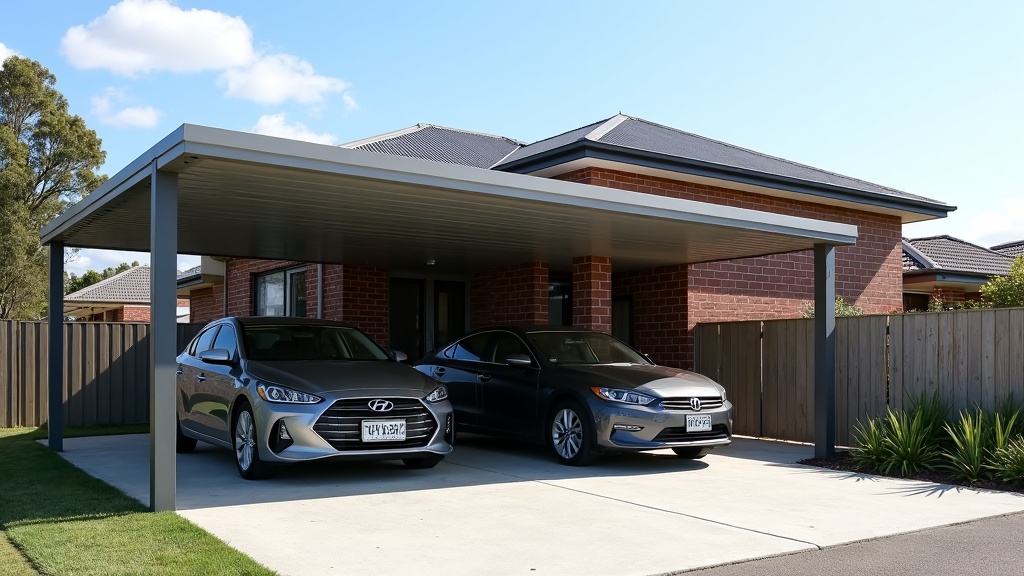
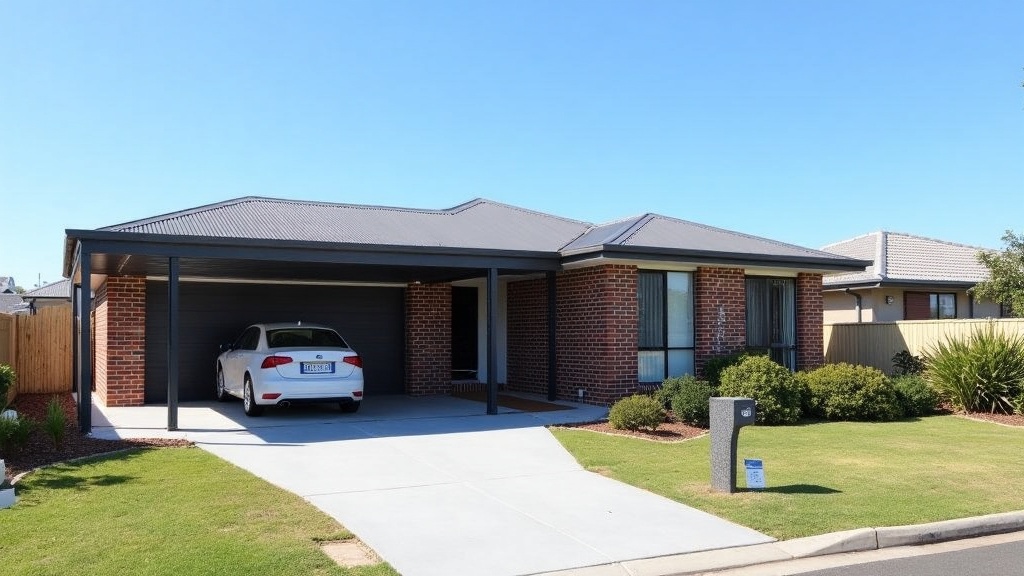
A carport is the simplest way to get your car out of the sun, frost and hail without the cost of a fully enclosed garage. They can be attached to the house or freestanding, with a flat, skillion or gabled roof to match your home. A carport tends to win when you want vehicle cover quickly and affordably, you are happy without lockable walls, and your block has room beside or in front of the house.
Pergolas at a glance — outdoor living vs vehicle shelter
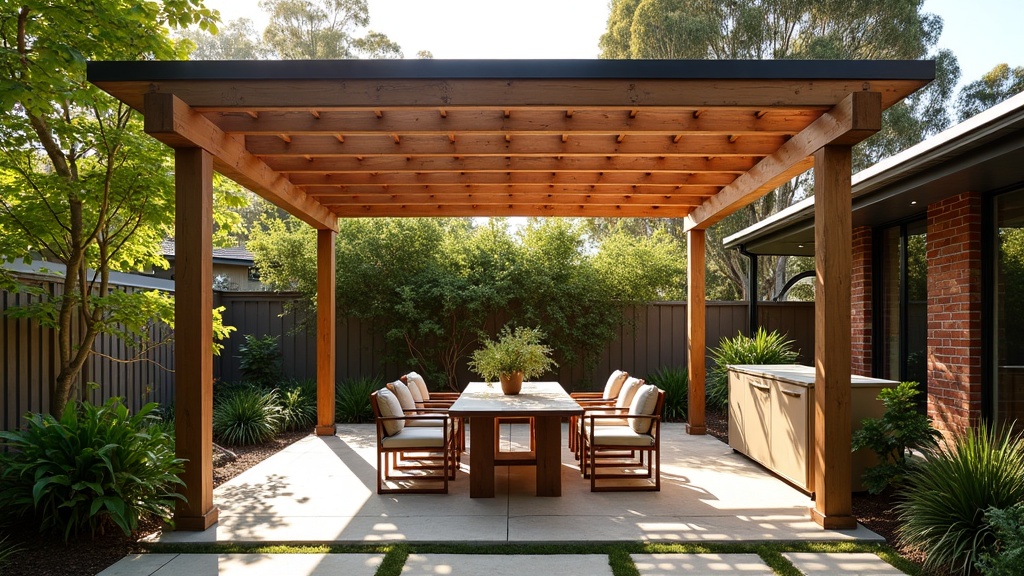
A pergola is about people, not cars. It defines an outdoor living area, takes the edge off the Melbourne sun, and can be left as open rafters or covered for year-round use. If your priority is somewhere to entertain or relax outside rather than shelter a vehicle, a pergola is usually the better spend. Some homeowners do both — a carport on the driveway side and a pergola over a rear or side patio.
Garages at a glance — build new, convert, or rebuild
A garage gives you lockable, weatherproof storage and the security a carport cannot. The three common paths are building a new garage, converting an existing garage into living space, or knocking down a tired one and rebuilding. Each comes with different costs, approvals and resale effects, so it is worth being clear on whether you most value parking, storage or extra room before you commit.
Driveways at a glance — materials, drainage and kerb appeal
The driveway is the surface everything else sits beside, and it does more work than people expect — it carries vehicle loads, sheds stormwater and sets the first impression of the property. Concrete, exposed aggregate, pavers, asphalt and gravel each have their place. Two things matter as much as the look: getting the fall and drainage right so water runs away from the house and garage, and keeping the finish consistent with the home and any new structures.
The decisions that cut across all four
Whichever projects you take on, a few questions come up every time:
- Materials and colours. Steel, timber, brick, render and concrete each age differently. Matching materials and tones to the existing house is what makes an addition look planned rather than bolted on.
- How it ties into the home. Anything attached to the house — a carport roof, a pergola beam, a garage wall — has to connect cleanly and load correctly. On a new build it is far easier to coordinate these from the outset; a custom builder such as Iconic Homes and Construction can plan a carport, garage and driveway as one integrated design rather than retrofitting them later.
- Adding value. Secure parking, a usable outdoor room and a tidy driveway all help street appeal, but only if they suit the home and the street. Over-building for the area rarely pays back.
Do you need a permit in Victoria? The short answer
It depends on the structure, the size, where it sits on your block and your council — so the honest answer is to check before you build, not after. In Victoria, building work is governed by the Building Act 1993 and the Building Regulations 2018, and many structures also sit under your local council’s planning scheme (overlays, heritage and the like). Some small, freestanding structures may be exempt from a building permit, but the thresholds vary, they change, and a planning permit can still apply even when a building permit does not.
Rather than rely on a number you read online, confirm your specific situation with your local council and a registered building surveyor before you order materials. A vehicle crossover (the section between the kerb and your boundary) is almost always the council’s, and needs its own approval. Getting this step right up front is far cheaper than fixing an unapproved structure later.
Where to go next
From here, it is worth digging into the detail of each project — carport types and timber care, pergola design and roofing, building or converting a garage, and choosing and draining a driveway. We are publishing dedicated Melbourne guides on each of these, covering the practical decisions, the permit picture and the trades who handle the work, so you can plan with your eyes open before the first load of materials arrives.