Whether you cover a pergola, and what you cover it with, decides how much of the year you actually use it. Open rafters are lovely in spring but offer little when the Melbourne sky opens up or the January sun bakes the patio. Covering options range from clear sheeting to insulated panels to roofs whose blades open and close. Each is a trade-off between light, heat, rain protection and budget. Here is how they compare.
Open rafters vs a covered pergola — what changes
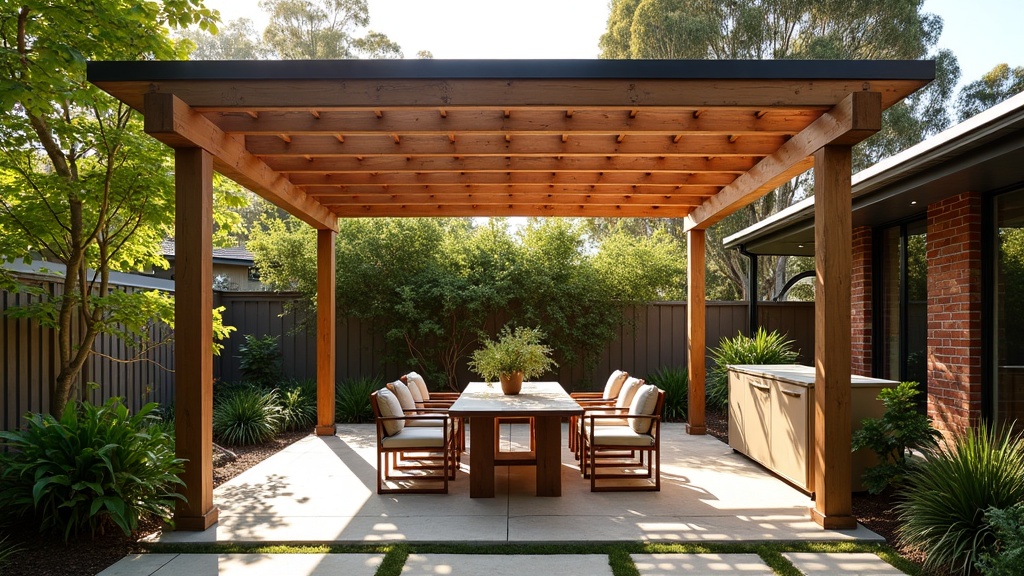
Open rafters filter sunlight and define the space, but they let rain straight through and only soften the sun rather than block it. The moment you add a solid or sheet covering, the pergola becomes a genuine all-weather room — but it also has to deal with real water run-off, can change how much light reaches the house, and may shift the structure into permit territory it avoided as open rafters. Deciding between the two is really deciding whether you want a shaded outdoor spot or a usable-in-all-conditions room.
Polycarbonate and clear roofing: light and heat trade-offs
Clear and tinted polycarbonate sheeting keeps the space bright and lets you keep an open feel while shedding rain. The trade-off is heat and noise: clear sheeting can let a lot of sun through and warm up underneath, and rain can be loud on it. Tinted and heat-reducing variants help with the glare and warmth. It tends to suit people who want to keep light coming into the house and do not mind some heat build-up on the hottest days. Treat any light-transmission or heat figures from suppliers as their product’s claims and compare like with like.
Insulated panel roofing for year-round comfort
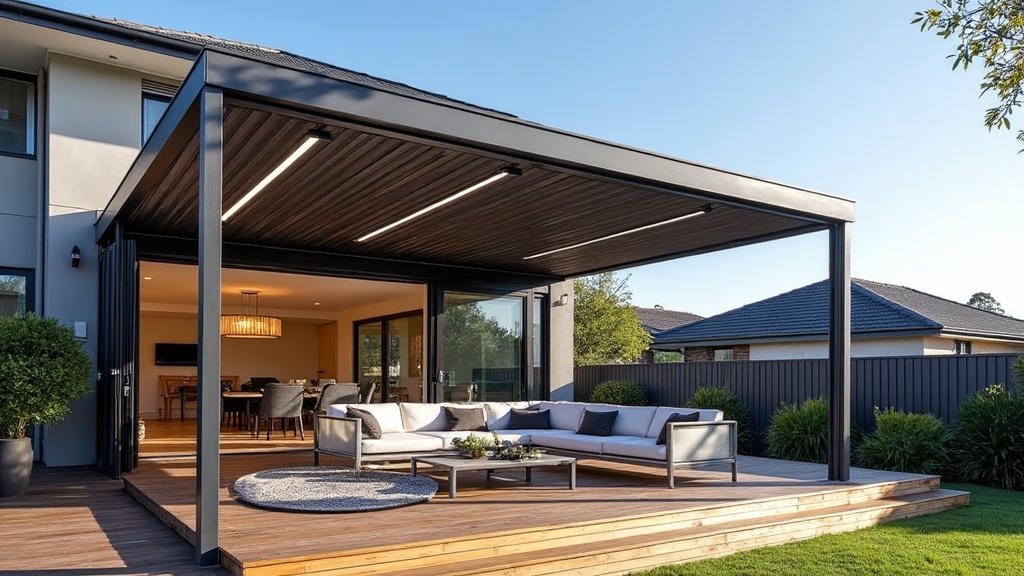
Insulated panel roofing — a solid sheet with an insulating core — blocks the sun entirely and cuts heat and rain noise, which makes the space far more comfortable in summer heat and winter rain. The cost is light: it casts proper shade, so the area underneath and any adjacent windows get darker. It suits homeowners who want a genuine outdoor room and are happy to trade brightness for comfort. Some systems include integrated lighting and the option to run services through the panels.
Louvred/opening roofs: flexibility vs cost
Louvred or opening roofs give you the best of both worlds — blades that tilt to let sun and breeze in, then close to shed rain — usually motorised. The flexibility is the appeal: open for a sunny lunch, closed for a downpour. The trade-off is cost and complexity; they are the most expensive option and have moving parts and motors to maintain. They suit people who want one structure that adapts through the seasons and are willing to pay for that control. Named louvre-roof systems are trademarked products, so compare them on their merits rather than by brand alone.
Rain run-off, gutters and where water goes
Any solid or sheet roof turns the pergola into a catchment, and that water has to go somewhere sensible — not onto the patio, against the house or over the boundary. That usually means guttering on the pergola tied into the property’s stormwater, and getting the falls right so it drains cleanly. This is easy to underestimate at the excited “let’s cover it” stage. Adding a roof creates real water to manage, and a roofing specialist such as AWS Roofing can size the guttering and tie it into the home’s existing system so the run-off has a proper path rather than finding its own.
Matching the pergola roof to the house
The roof is the most visible part of a covered pergola, so it should sit with the house rather than shout against it. Echo the home’s roof colour and profile where you can, keep the pitch and proportions sympathetic, and choose a finish that reads as part of the property. A roof that matches the home looks deliberate; one chosen purely on price often looks like exactly that. Decide the covering and the look together, not as an afterthought once the frame is up.