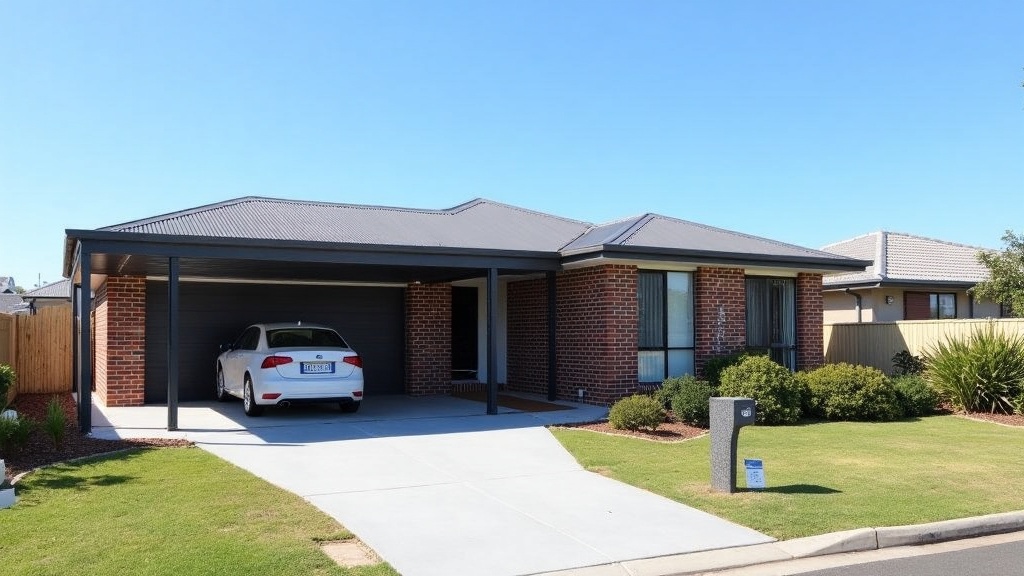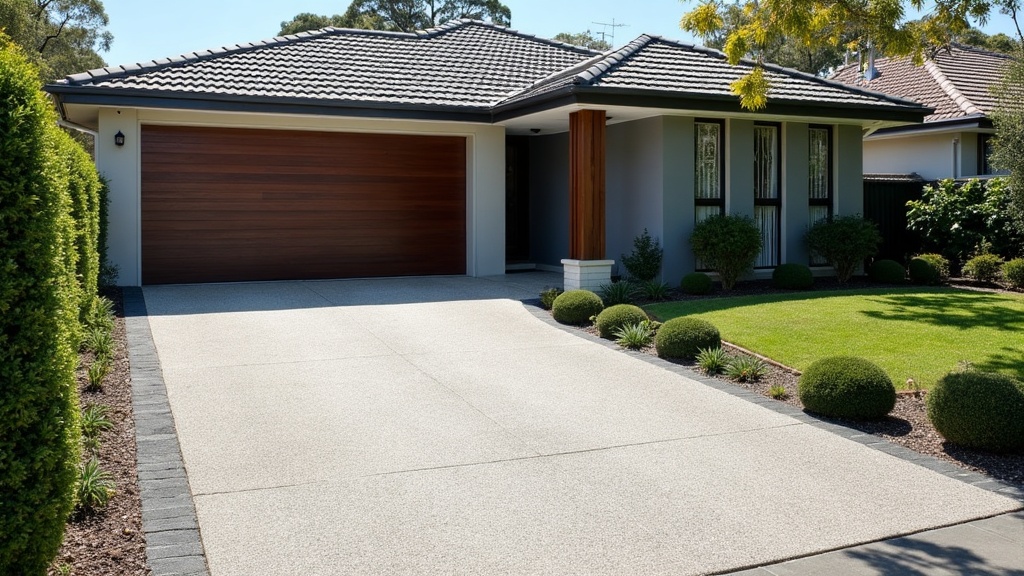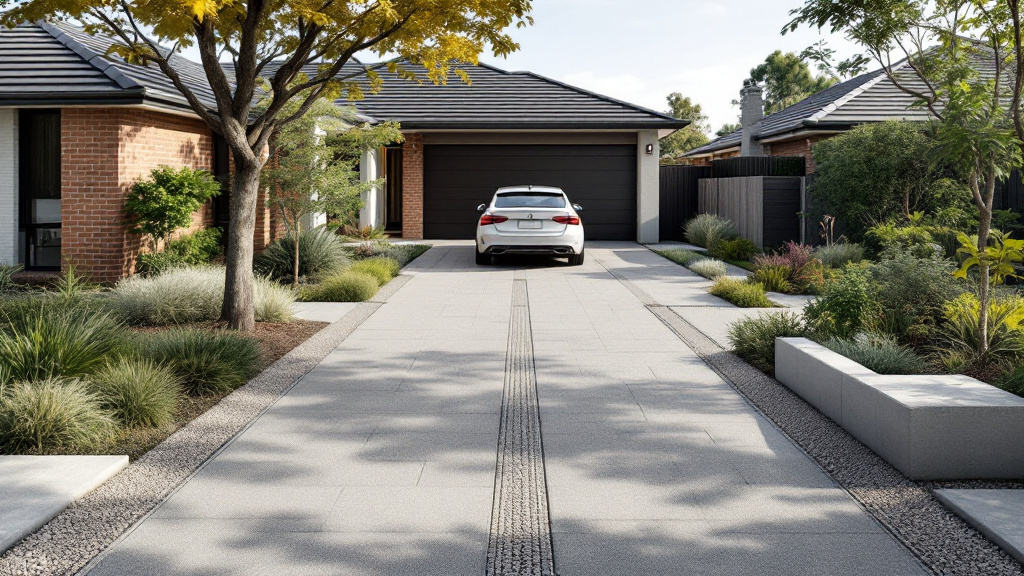
Poured concrete isn’t the only way to get a car off the street and onto your block. A permeable driveway lets rain soak straight through instead of sheeting off into the gutter, and more Melbourne homeowners are asking about it every year. Here’s what it actually involves, what it costs you in upkeep, and when it’s the right call.
What a permeable driveway actually is
Instead of one solid, sealed slab, a permeable driveway uses a surface with gaps built in: jointed pavers, a plastic or concrete grid filled with gravel or turf, or a specially mixed porous asphalt or concrete. Water doesn’t pool and run for the street; it drops through the surface into a compacted gravel base underneath, where it either soaks into the ground or drains away slowly. The car still parks exactly where it always did. What changes is where the rain goes.
Why Melbourne councils are warming to it
As more of Melbourne gets built out with houses, garages and driveways, less of each block is left to soak up rain naturally. That extra hard surface has to go somewhere, and it’s usually straight into the stormwater system, which is already under pressure in a lot of established suburbs during heavy downpours. A permeable driveway keeps some of that water on your own block rather than pushing the whole load onto the street. Some councils now factor permeable surfaces into stormwater management assessments for new work, particularly where a block is close to its impervious surface limit. Requirements vary a lot from council to council and change over time, so confirm the current rules for your address with your local council before you commit to a design.
The main permeable options
You’ve got a few genuine choices, each with a different look and price point.
- Permeable pavers: concrete or clay units laid with open joints filled with gravel or a permeable jointing sand, so water drains between them rather than off the top.
- Grid systems: a plastic or concrete lattice laid over the base and filled with gravel or turf, giving a strong load-bearing surface that still lets water through.
- Porous concrete or asphalt: a specially graded mix with fewer fine particles, leaving tiny voids throughout the slab itself rather than at the joints.
- Spaced pavers or gravel strips: a simpler, cheaper option where paving only sits under the wheel tracks and the rest of the strip is gravel or lawn.
Grid-and-turf and gravel options tend to be the cheapest to install but need more upkeep to stay tidy. Permeable pavers and porous concrete cost more up front and hold their look longer with less fuss.
What’s underneath matters more than what’s on top
A permeable surface is only as good as the base it sits on. Underneath the pavers or porous slab there’s usually a compacted, open-graded gravel layer that acts as a temporary reservoir, holding water until it soaks into the ground below or drains off through an outlet point. Get that base wrong, too shallow, wrong stone size, poorly compacted, and the whole system clogs or floods within a couple of seasons no matter how good the surface looks. This isn’t really a DIY base course; it needs to be designed for your soil type and the volume of water coming off your roof and hardstand, so get a licensed paver or concreter who’s actually built permeable systems before to price and install it.
Working around existing trees
A lot of Melbourne blocks earmarked for a new driveway already have an established tree nearby, and permeable paving is often the better choice specifically because it lets air and water keep reaching the root zone instead of sealing it under solid concrete. If there’s an old stump sitting in the footprint from a tree that came down years ago, don’t try to dig it out yourself before the base goes in. Ripping at a stump with a mattock disturbs far more soil than it looks like it should, and it can tear up the root structure of anything still growing nearby. A qualified arborist team like Waratah Professional Tree Care can grind it out cleanly without wrecking the surrounding ground you’re about to build a permeable base on top of.
Keeping it permeable: the maintenance reality
The one thing every permeable surface has in common is that it can clog. Fine sediment, leaf litter, mulch and general grime work their way into the joints or pores over time and slowly choke off the drainage. The fix isn’t complicated but it is a real, ongoing job:
- Sweep or blow off leaves and debris regularly: don’t let organic matter build up and break down into the joints.
- Avoid pressure-washing loose jointing material straight out: it needs replacing, not blasting away.
- Get the surface professionally vacuum-swept every year or two: this is the one job that actually restores lost permeability once it’s dropped off.
- Keep garden beds and lawn edges from spilling soil onto the surface: dirt washing on from an adjoining garden is one of the most common causes of early clogging.
Skip that maintenance for a few years and a permeable driveway starts behaving like a regular one, minus the smooth finish.
Is it right for your block?
Permeable paving suits a block where stormwater is genuinely a problem: low-lying sites, properties near capacity on impervious area, or anywhere water already pools before it gets there. It’s less worth the extra cost and upkeep on a well-drained block with easy access to existing stormwater. Either way, get a firm quote from someone who’s installed permeable systems before, not just standard concrete, and check with your council early if the driveway is part of a bigger renovation or new build application.