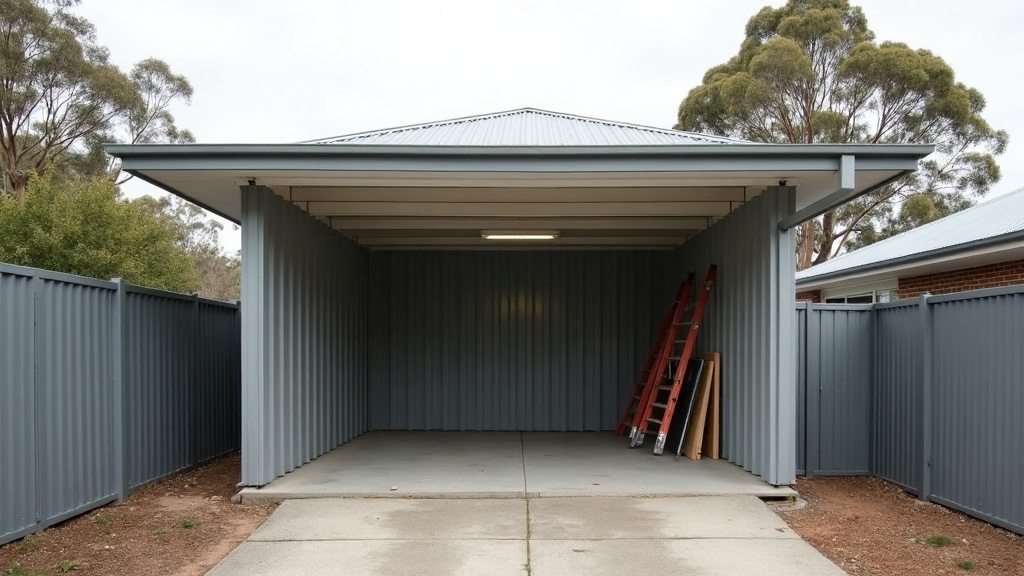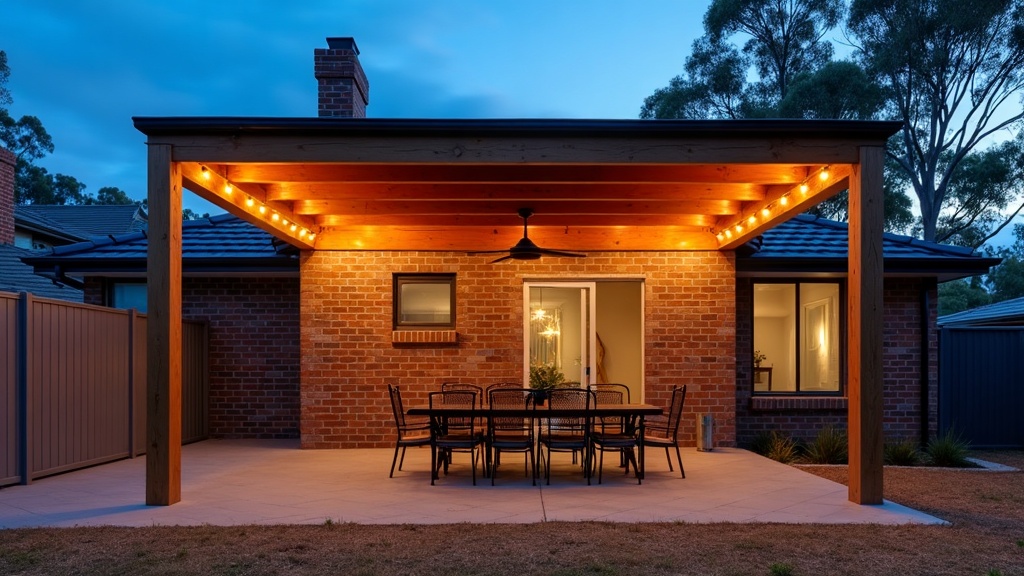
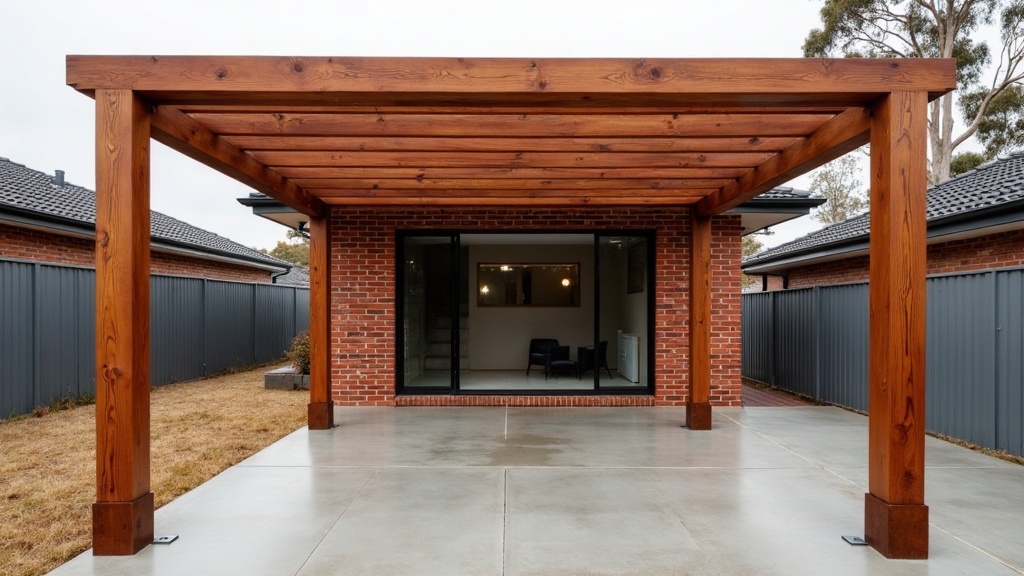
For most Melbourne pergolas the honest shortlist is three deep: treated pine if the budget is doing the deciding, merbau if you want a hardwood that looks rich under oil without costing the earth, and an Australian hardwood like spotted gum or blackbutt if you want the best of it and will keep up the maintenance. Everything else is either a niche answer to a specific problem or a decorative product pretending to be structural.
What Melbourne does to timber
Two things, mainly. The first is movement. We get wet, cold winters and dry, hot summers, and timber takes on moisture and gives it back with the seasons. That is what causes cupping, twisting and the fine surface splits people call checking. Wide flat members suffer more than chunky square ones.
The second is ultraviolet. Sun is what greys a pergola off and breaks down the surface fibres, and nothing you buy is immune. A coating is not a luxury on an open structure, and on the north and west faces it will need redoing sooner than the manual suggests.
The shortlist, species by species
Treated pine
The default, and there is no shame in it. Plantation pine is soft and not naturally durable, so it is pressure treated to survive outside. The hazard class system under the Australian Standard AS 1604 is what you are buying: H3 is for timber above ground and exposed to the weather, H4 is for timber going into the ground. If your posts are being concreted into soil rather than sitting on stirrups they need to be H4, and plenty of cheap jobs get that wrong.
Strengths: cheapest by a clear margin, straight, easy to work, takes paint beautifully. Weaknesses: it dents easily, it can twist as it dries, and it looks like treated pine. If you are painting the structure anyway, pine is often the smart money.
Merbau
The one most people picture when they say hardwood pergola. Dense, hard, holds its shape well and comes up a deep red brown under decking oil, and it is durable enough for exposed outdoor use without chemical treatment.
The catch is tannin. Merbau leaches a rusty brown stain for the first several months and it will run straight down onto your pavers, concrete and rendered wall. Two things fix it. Oil every face and every cut end before the timber goes up, including the ends you cannot see once it is fixed. Then hose the structure and the surface below it a few times in the first weeks so the leachate washes off rather than sets.
Spotted gum and blackbutt
Australian hardwoods, and the nicest thing you can build a pergola from if you want timber to look like timber. Spotted gum has real character in the grain, blackbutt is paler and more even. Both are properly durable and both are heavy, which matters more than people expect: a spotted gum beam over a four metre span is a two person lift and it puts real load through the posts and footings. They also cost more and they will check on the exposed face whatever you coat them with.
Cypress and western red cedar
Two useful outliers. White cypress is naturally termite resistant without treatment, a genuine advantage in parts of Melbourne, but it is knotty and hard to get in long structural sections. Western red cedar is light and very stable, though soft and not durable in ground contact, so it belongs in rafters and screening rather than posts.
The non-timber alternatives
Powder coated aluminium is the low maintenance answer. It will not rot or move, and a good powder coat lasts a long time with a wash, though it reads as a modern product rather than a timber structure. Steel framing gives you longer spans with slimmer members than timber can manage, useful over a wide entertaining area, but it needs proper galvanising and careful detailing where it meets the house.
Composite is the one to be careful with. Composite and capped composite are cladding and decking products, not structural ones. You can wrap a post or form battens with them, but the frame underneath still has to be timber, steel or aluminium doing the actual work. If a quote has composite carrying load, ask the question.
Structural is not the same as decorative
This is where DIY pergolas come unstuck. The posts, beams and rafters carry load, including wind uplift, which in an open structure is the force that matters most. Those members need the right species, grade and size, tied down properly at every connection. Battens, screening and trim can be whatever you like the look of.
Two things to settle before you buy anything. Whether the pergola needs a building permit is decided by your local council under the Victorian building system, with the Victorian Building Authority as the regulator, so ask them rather than your timber supplier. And if your property sits in a designated bushfire prone area, construction requirements are governed by AS 3959 and the bushfire attack level assigned to your site, which restricts what you can build from.
What to put on the quote
Ask for these in writing and comparing builders gets much easier:
- Species and treatment: not just “hardwood” but the actual species, and the hazard class for any treated pine.
- Post detail: whether posts are in ground or on galvanised stirrups above a footing, and the treatment class to match.
- Member sizes and spans: what size the beams are and how far they span between posts.
- Tie down and fixings: what brackets and bolts are being used, and whether the fixings are galvanised or stainless.
- Coating: what product goes on, how many coats, and whether cut ends and hidden faces are sealed before assembly.
If two quotes look far apart on price, it is almost always one of those five lines and not the labour. Pick the timber for how you want to live with it, then make the paperwork say so.