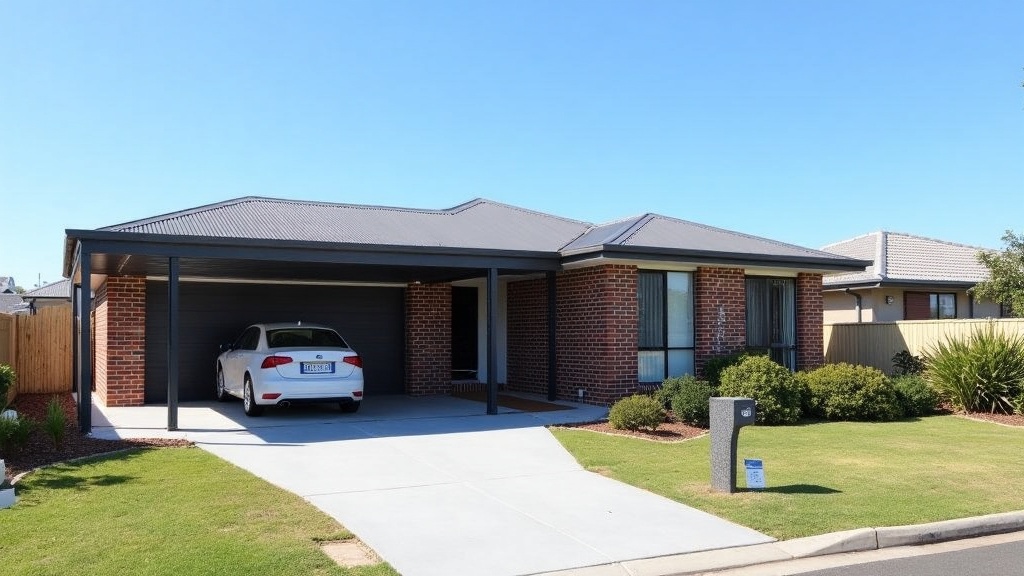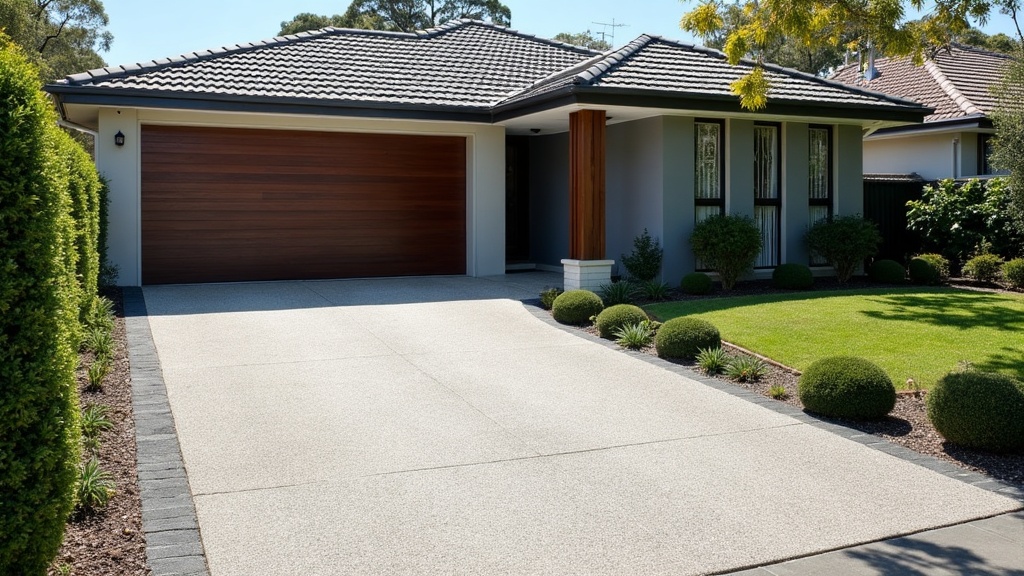
A driveway that pools water after every shower is more than an annoyance. Standing water is a slip hazard, it shortens the life of the surface, and water running the wrong way can end up against your garage or the house — which is where a drainage problem turns into a building problem. Most of this is avoidable with the right fall and the right drains, planned before the concrete goes down. Here is how driveway drainage works and where it crosses into licensed territory.
Why driveways pool water (and why it matters)
Water pools when there is nowhere for it to go — usually because the surface is too flat, the fall runs the wrong way, or there is no drain at the low point. On a driveway that matters more than on a path: vehicles track water inside, pooling near the garage or house can find its way into the building, and constant wet-dry cycles wear the surface and encourage moss and staining. A driveway that sheds water cleanly lasts longer and keeps water away from where it can do damage.
Getting the fall right from the start
The single most important thing is fall — the gentle slope that makes water run where you want it. It needs to be enough to move water without being steep enough to scrape a car or feel awkward, and it has to run toward a drain or a legal discharge point, never back toward the house or garage. Fall is set when the driveway is formed up and poured, so it is far cheaper to get right at the start than to grind or re-lay later. This is the part to nail before anything is laid.
Channel and grated drains: where they help
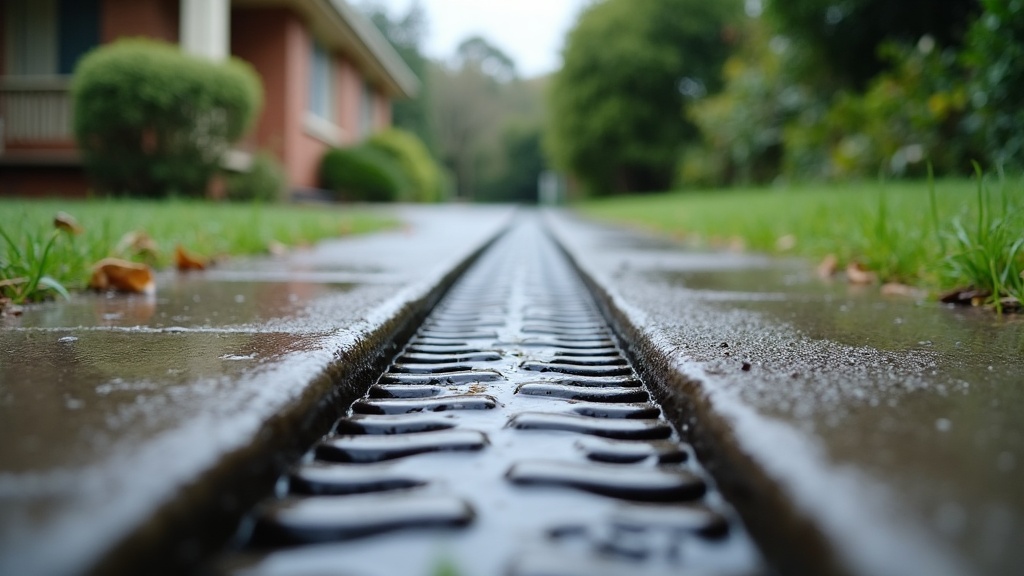
Where fall alone cannot carry water away — across the mouth of a garage, at the bottom of a sloping driveway, or where the driveway meets the house — a channel (grated) drain catches water along its length and carries it off. Set across the low point, it intercepts run-off before it reaches the garage or the house and feeds it into the stormwater system. Point drains (pits) do a similar job at a single low spot. The right type and placement depend on where the water collects, so plan them around the actual low points of your design.
Where stormwater is legally allowed to go
You cannot simply send driveway water wherever is convenient. Stormwater has to discharge to a legal point — typically the property’s stormwater connection — and where it is allowed to go is regulated, with requirements that vary by council and water authority. Directing run-off onto a neighbour’s land or into the wrong system causes disputes and can breach the rules. Before you commit to a drainage design, confirm your council’s and water authority’s requirements for where stormwater must connect on your property.
Protecting the garage and house from run-off
The whole point of driveway drainage is keeping water out of the buildings. That means fall that runs away from the garage and house, a drain across the garage entrance where the driveway slopes down toward it, and making sure roof and driveway water are both accounted for rather than fighting each other. Water against a slab or wall is one of the most common — and most damaging — driveway problems, and it is almost always a drainage design that was never thought through. Design the water’s path deliberately and the buildings stay dry.
When drainage becomes a licensed plumber’s job
Here is the line: shaping the driveway and setting the fall is part of the driveway works, but connecting driveway stormwater into the property’s legal drainage point is licensed plumbing work and is regulated. That connection should be done by a licensed plumber such as Creek to Coast Plumbing, who will tie it into the stormwater system correctly and to the requirements that apply to your property — not improvised on site. Plan the drainage with that in mind, and bring a licensed plumber in for the connection rather than treating it as a DIY step.