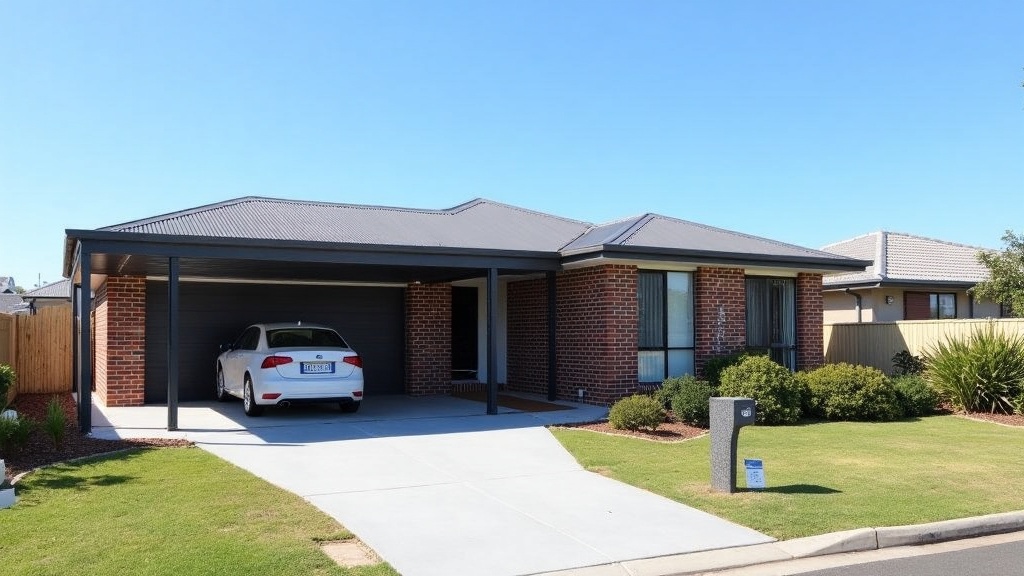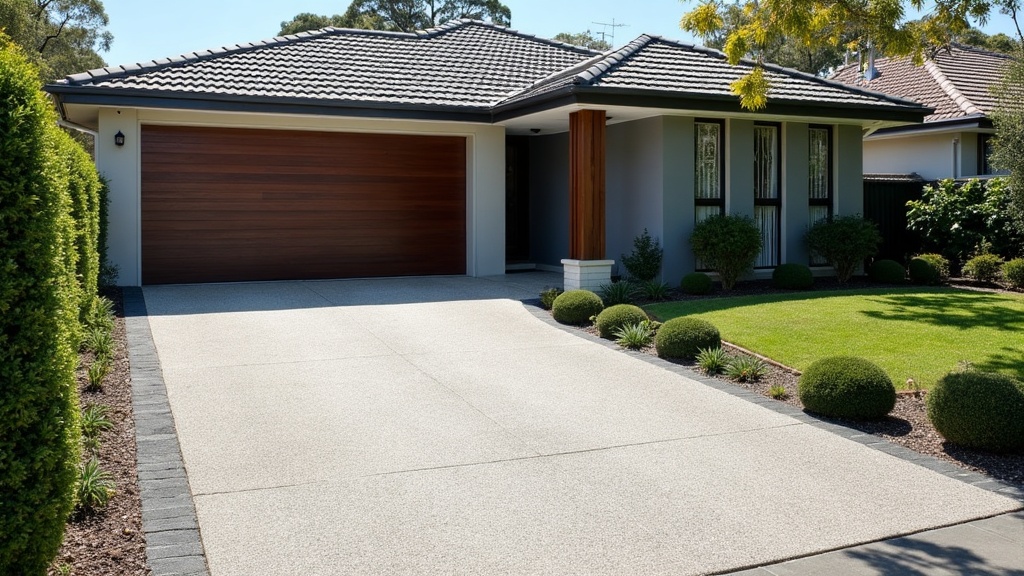
Walk out the front of most Melbourne homes and the driveway takes up more of the view than the garden does. It runs from the street to the garage door, it is the first hard surface anyone sees, and it is usually the last thing anyone thinks to finish properly. Get the edging, lighting and planting around it right, and the whole frontage lifts. Leave it as bare concrete running into lawn, and even a nice house looks unfinished.
Why the driveway is doing more work for kerb appeal than people think
A driveway is not just a strip to park the car on. It is the biggest single hard surface most people see from the street, and it frames everything either side of it: the garden beds, the front door path, the letterbox, the fence line. If the driveway looks tidy and deliberate, the eye reads the whole property as well kept. If it is cracked at the edges, has grass creeping in, or just stops dead with no transition into the garden, that is what people notice first, before they even register the house itself.
Edging and borders that frame the driveway properly
Edging does one simple job: it draws a clean line between the driveway and everything next to it, so the surface reads as finished rather than half-done. A few options that actually hold up on a Melbourne block:
- Concrete or paver edging: sits flush or slightly proud of the driveway, keeps mulch and soil off the surface, and matches a concrete or paved drive without fighting it visually.
- Steel or aluminium edging: a thin, low-profile line that suits a modern front garden, especially where the beds are curved rather than straight.
- Brick or block border: works well against an older weatherboard or brick home, and gives you something solid to mow against.
- Timber edging: cheap and easy to install, but the one that weathers fastest against a driveway, so expect to replace it sooner than harder materials.
Whatever you choose, keep it consistent along both sides. A driveway with edging on one side and none on the other looks like an unfinished job, not a design choice.
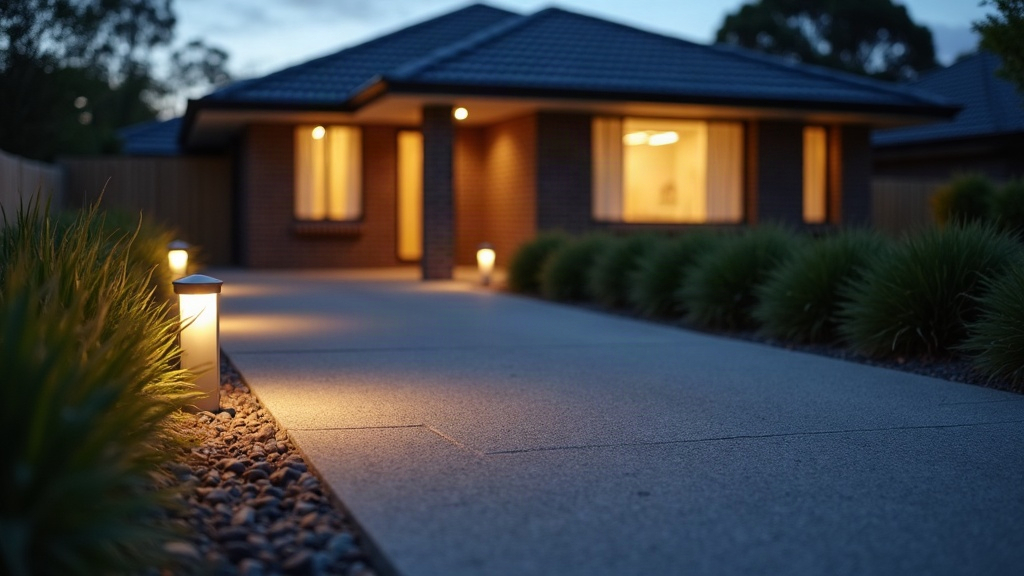
Low-voltage lighting along the driveway and path
Once the sun goes down, a driveway with no lighting disappears into the dark, and so does any kerb appeal you have built up. Low-voltage LED lighting, run off a transformer rather than mains power, fixes that without turning the front of the house into a job site. A few things worth getting right:
- Spacing: even, regular spacing along the edge reads as deliberate. Random placement looks like an afterthought.
- Fixture height: low bollard or in-ground uplights sit better against a driveway than tall garden lights, which tend to draw the eye away from the surface itself.
- Colour temperature: a warm white light suits most Australian home exteriors far better than a cold blue-white glow.
- Timers or sensors: a dusk-to-dawn sensor means the driveway is always lit when it needs to be, without anyone remembering to flick a switch.
Low-voltage garden lighting is generally within reach for a competent DIYer, but anything tying into the home’s mains circuit, or a hardwired outdoor power point to run it from, is licensed electrical work. Get a licensed electrician for that part rather than improvising a mains connection.
Planting choices that soften the edge without causing problems
A hard-edged driveway with nothing growing near it looks stark. The trick is choosing plants that soften the line without becoming a maintenance headache. Low, tidy border planting does more for kerb appeal than one showy feature plant halfway down the drive. Look for species that stay compact and do not send runners or surface roots toward the slab, and suit your aspect and soil, which is exactly the kind of call a local nursery or landscaper makes better than a generic list ever will.
Be careful with anything that grows tall enough to block sightlines near the street or the crossover. A driveway that looks great but makes it hard to see oncoming traffic when reversing out is not doing its job. If you are planting near an existing tree or a significant root zone close to the driveway, get a qualified arborist to look at it before you dig, rather than risking root damage on one side and drainage problems on the other.
Tying it all together with the crossover and front garden
The best-looking driveways do not stop and start abruptly, they read as one continuous piece from the kerb to the front door. The edging, surface material and lighting should carry through from the crossover (the section between the kerb and your boundary) right up to where the driveway meets the garage or carport. Any work on the crossover itself, widening it, adding a new one, or changing its finish, is something your council needs to sign off on, so check with your local council before starting anything there.
Matching materials and colours between the driveway, the edging and any path to the front door pulls the whole frontage together. A driveway that looks great on its own but clashes with the front path or the fence just shifts the “unfinished” feeling somewhere else.
Common mistakes that undercut kerb appeal
- No edging at all: grass and mulch creep onto the surface, and the driveway never looks properly finished.
- Overgrown borders: plants that outgrow their spot end up hiding the driveway rather than framing it.
- Harsh, uneven lighting: too bright, too cold or too randomly spaced draws attention to itself instead of the property.
- Ignoring the crossover: a beautifully finished driveway meeting a cracked, mismatched crossover still looks unfinished from the street.
- DIY electrical shortcuts: running mains-powered lighting without a licensed electrician is not worth the risk.
None of this needs to happen all at once. Sort the edging first, since it is the cheapest fix with the biggest visual payoff, then add lighting and planting as time and budget allow. A driveway that is properly framed, lit and planted does more for how a home reads from the street than almost anything else on the block.