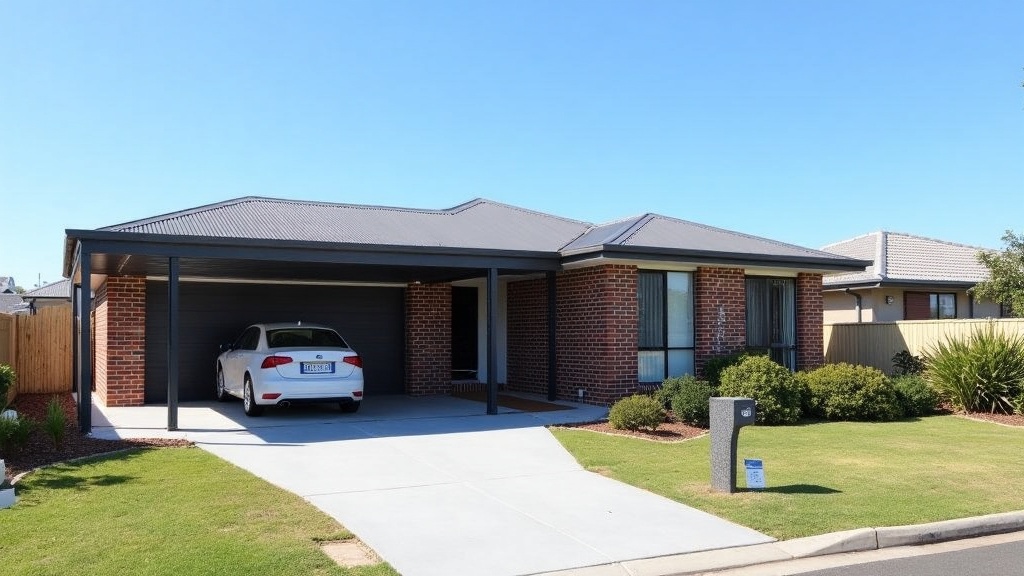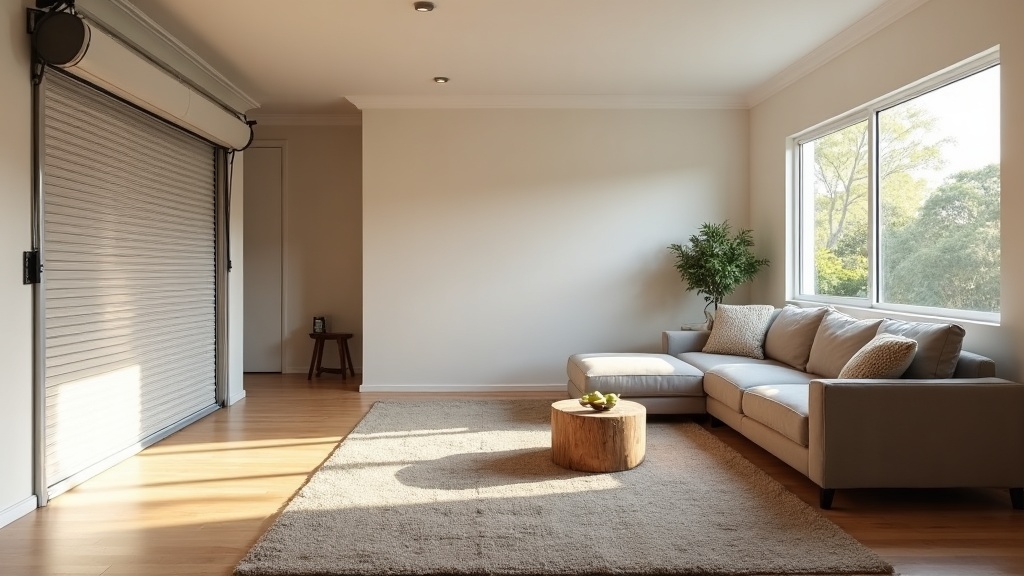
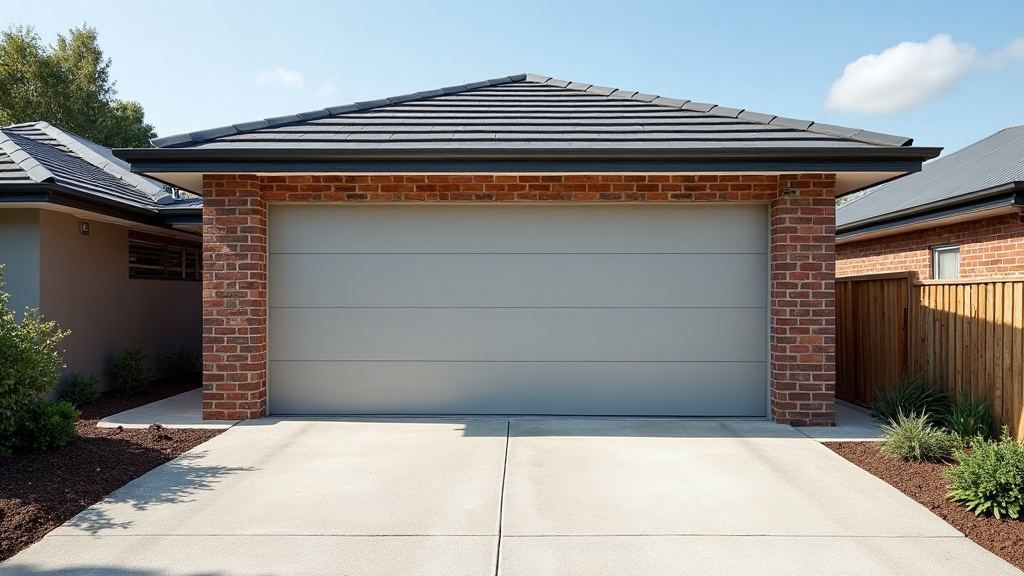
A garage is a bigger commitment than a carport — it is a fully built, lockable structure with a slab, walls, a roof and a door, and it needs to be planned like one. Get the size, access and approvals sorted before you build and you end up with a garage that fits the cars, suits the house and adds value. Skip that thinking and you can end up with a door you cannot swing into or a slab in the wrong spot. Here is what to work through first.
How big a garage do you actually need (single, double, tandem)?
Start with what is going in it, not a generic size. A single garage holds one car; a double holds two side by side; a tandem holds two cars nose-to-tail, which suits a narrow block where width is tight. Then add what else lives in there — bikes, bins, a workbench, storage — because a garage sized purely to the cars feels cramped the day you move in. Rather than chase a “standard” measurement, work to the vehicles and storage you actually have, and have a builder or designer confirm the real dimensions and door clearances for your situation.
Attached vs detached on a Melbourne block
An attached garage connects to the house, giving sheltered access straight indoors and often a tidier, more integrated look — but it has to tie into the existing structure and roof. A detached garage sits separately, which can be easier to place on the block, keeps noise and fumes away from the house, and gives more freedom on orientation, at the cost of a covered walk to the door. Block shape, where the driveway lands and how you want to use the garage usually decide which makes sense.
Driveway access, turning circles and door clearance
A garage is only as usable as the path to it. You need a driveway that lets you approach the door at a workable angle, room to turn and line up — especially on tight or sloped blocks — and clearance for the door to open without fouling the eaves or the car. It is worth mapping how a car actually moves from the street to inside the garage before fixing the position, because a garage you have to shuffle back and forth to enter gets old fast. An engineer or builder can check the approach and clearances against your block.
Slab, footings and ground conditions
The slab and footings carry everything, and they depend on your ground. Reactive clay soils, slope and drainage all affect what the slab needs to do, which is why slab thickness, reinforcement and footing design should come from an engineer rather than a rule of thumb. The slab also has to be set at the right level relative to the driveway and to drain water away from the building. This is not the place to economise on advice — getting the foundation right is what stops cracking and movement down the track.
Roof, cladding and matching the house
A garage that matches the house looks like it belongs; one chosen on price alone looks like an outbuilding. Echo the home’s roof profile and colour, its brick or render, and its proportions so the garage reads as part of the property. This matters most for an attached garage, where the roof and walls literally meet the house, but it lifts a detached garage too. Decide the cladding and roof finish alongside the structure, not as a leftover choice once the frame is up.
The approvals order and who to involve
A garage will generally need approval, and the time to confirm that is before anything is built — check your council’s siting requirements and talk to a registered building surveyor about whether a building permit, a planning permit, or both apply to your block. Sort that first, then the slab, frame, roof and door follow in order. A garage built as part of a wider project can be folded into one coordinated scope by a single builder rather than juggling separate trades and approvals yourself. Whether you build it standalone or as part of a bigger job, get the spec and the approvals locked down before the first load of materials lands.