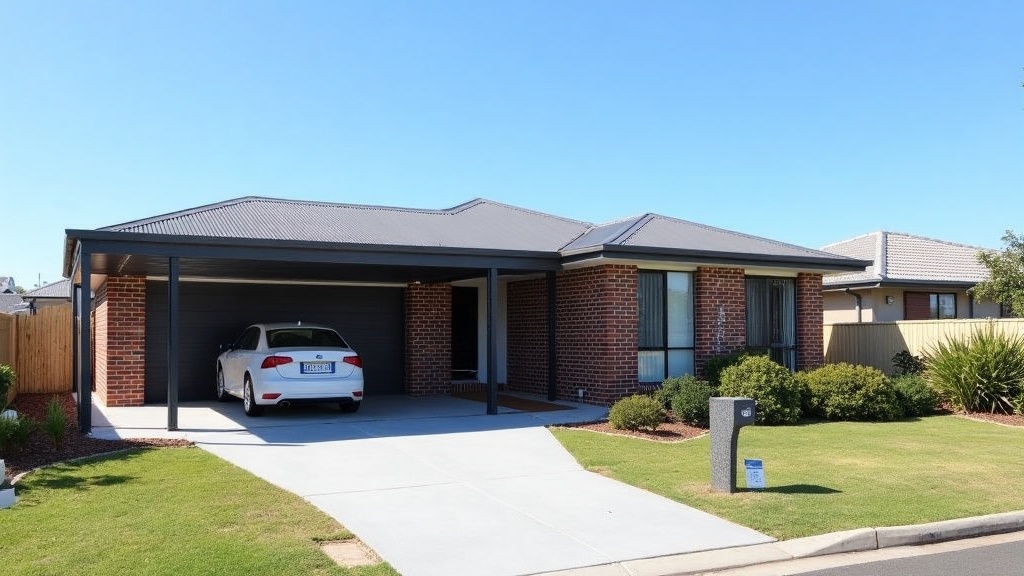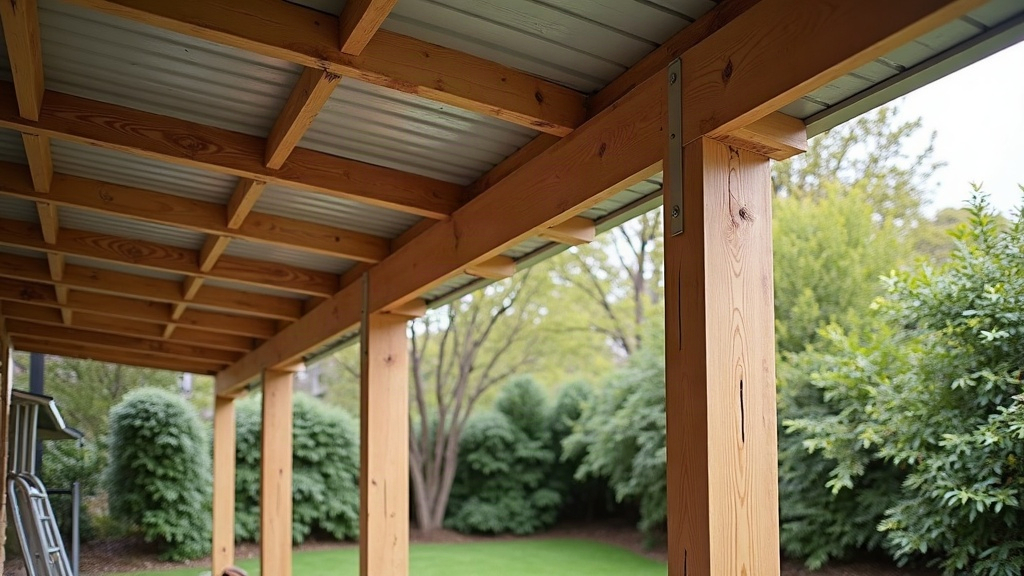
Most pergolas don’t fail from one big event. They fail from small things left a year too long: a bolt that worked loose, a gutter full of leaves, a post base that sat wet all winter. An hour or two each season catches nearly all of it. Here’s the checklist I’d run on a Melbourne pergola, in the order the weather asks for it.
Spring: the full walk-around
Spring is the big one. Winter has done its worst, the timber has been wet for months, and you want to find problems before the outdoor table goes back under it.
- Post bases: Push a screwdriver into the timber just above the stirrup or bracket. If it sinks in easily, there’s rot. On steel posts, look for rust bubbling where the post meets the concrete or the base plate.
- Bolts and brackets: Put a spanner on every bolt you can reach. Timber shrinks and swells through the year, and a bolt that was tight at install won’t stay that way.
- Termite signs: Check the posts and any timber near the ground for mud tubes or soft, hollow-sounding sections. If you find either, leave the tubes intact and get a pest inspector in first.
- The house connection: If the pergola is attached, look at where the beam or ledger meets the wall or fascia. Cracked sealant or a lifted flashing here lets water into the house, not just the pergola.
Late spring: oil or paint the timber
A timber pergola needs its coating renewed before summer, not after it. The tops of the rafters and beams cop the most sun, and that’s where the finish goes first. If the timber has gone grey or water no longer beads on it, it’s due.
Wash it down, let it dry for a couple of days, then oil it or touch up the paint. Pick a mild, overcast day. Oil brushed on in full January sun skins over before it soaks in and ends up patchy. Painted timber is less work year to year, but any crack in the paint needs attention early, because water gets behind it and stays there.
Summer: look up at the roof
Summer is when you’re under the pergola most, so it’s a good time to look up.
- Polycarbonate sheeting: Look for yellowing, hairline cracks around the screws, and sheets that have started to sag between purlins. Old polycarbonate turns brittle, and once it clouds over it lets through less light.
- Metal roof sheeting: Check the screws for perished rubber washers and the laps for rust stains. Rust that starts at a lap or a screw hole spreads along the sheet from there.
- Fans, lights and heaters: Make sure fittings are secure and nothing is rubbing on a cable. Anything wired in is a job for a licensed electrician. Energy Safe Victoria is the state’s energy safety regulator.
If the sheets have been patched before and the rust is back along the laps, more sealant won’t change the outcome. That’s the point to put new sheets on the pergola roof. Metal roofers such as AWS Roofing install new Colorbond and Zincalume roofs on extensions and outbuildings, and a pergola roof is among the jobs shown on their metal roofing page.
Autumn: gutters and leaves
Melbourne autumn drops a lot of leaves on a pergola roof, especially under plane trees and gums. A roofed pergola with a blocked gutter overflows at the worst spot, usually right where you’ve put the barbecue or the back door.
- Gutters and downpipes: Clear them out mid-autumn and again once the trees are bare. Run a hose down the downpipe to make sure it isn’t blocked further down.
- Roof sheets: Brush off leaf build-up, particularly on low-pitched roofs where it sits and holds water.
- Sheltered metal: Hose down the undersides of gutters and any steel the rain doesn’t reach. Dirt and salt left sitting there are where corrosion gets its start.
Winter: blinds, screens and wind
Winter here is as much about wind as rain. Outdoor blinds left down in a strong northerly act like a sail, and that load goes straight into the posts and the fixings into your house.
Roll blinds up when strong winds are forecast and check that their tie-down points are still solid. Prune back any climbers so they don’t add weight or hold water against the timber. Once a month, glance at the post bases after rain. Water pooling around them means the ground needs regrading or the drainage needs a look.
What to hand over
A homeowner can do most of this list with a ladder, a hose and a spanner. A few jobs are worth handing over:
- Structural rot: A rotten post or beam needs a builder to prop the structure and replace that member properly.
- Roof sheeting: Working on a pergola roof means working at height on sheets that won’t take your weight.
- Wiring: Any change to wired fans, lights or heaters needs a licensed electrician.
Jot down the date of each job in your phone. Next year you’ll know exactly when the oil went on and when the gutters were last cleared.