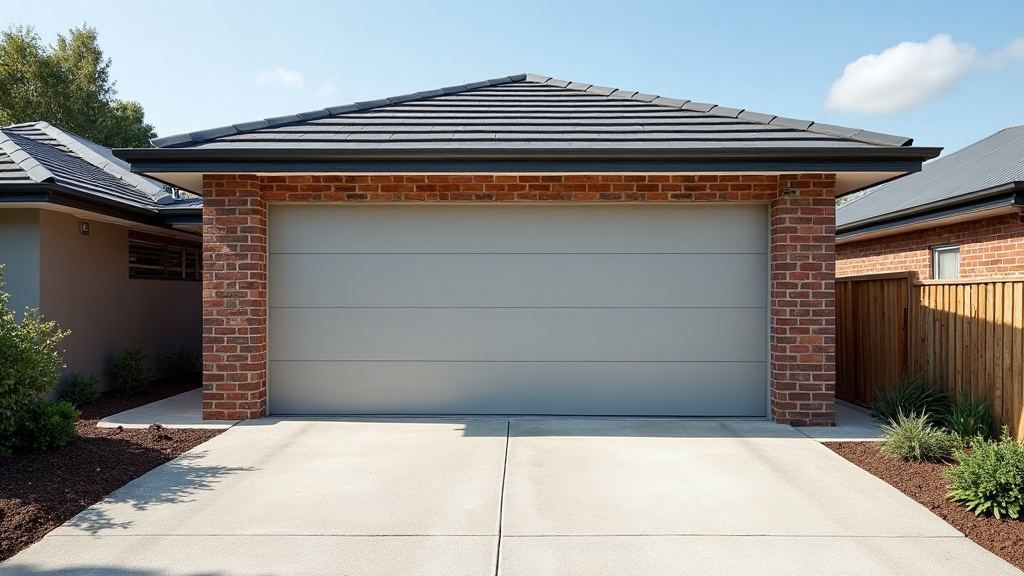
A garage is one of the hardest-working spaces in the house — and one of the most under-wired. People plan the slab and the door carefully, then end up running everything off a single power point and one dim globe. A bit of thought about power, lighting and a future EV charger before you build saves chasing cables through finished walls later. Here is what to get right, and where the line sits between planning and licensed work.
Planning garage power before the slab goes down
The cheapest time to put power where you want it is before the slab is poured and the walls are closed up. Conduit can be run in the slab, cables can be chased through open framing, and the switchboard capacity can be checked while everything is accessible. Think about where you will want power, lighting and any EV charging, and have it designed in early. Retrofitting circuits into a finished garage is doable but messier and dearer, so the planning conversation belongs at the start, not the end.
Lighting layout for a working garage
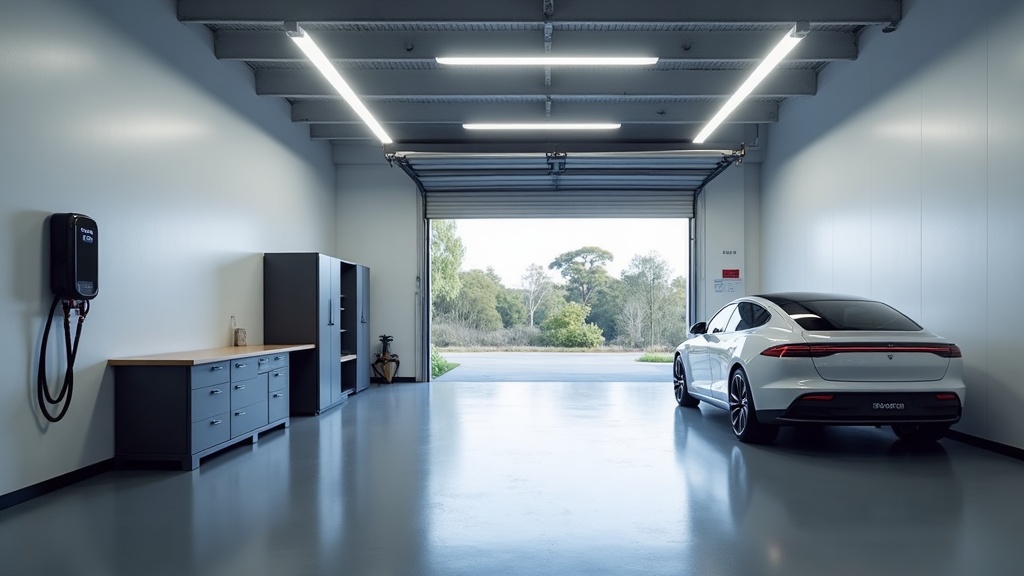
A single ceiling light leaves you working in your own shadow. A working garage wants even, bright lighting across the whole floor — typically several fittings spread across the ceiling rather than one in the middle — plus task lighting over a workbench and good light near the door. Bright, even light makes the space safer and far more usable, whether you are working on a car, finding something on a shelf, or just parking on a dark winter evening. Plan the layout around how you will use the space.
Circuits for tools, fridges and a workshop
If the garage doubles as a workshop, one circuit will not cut it. Power tools, a compressor, a second fridge or freezer and battery chargers all draw current, and running them off a single overloaded circuit trips breakers and is unsafe. The right answer is enough dedicated circuits and well-placed outlets for what you will actually plug in. Work out your likely tools and appliances up front so the circuits can be designed to suit, rather than discovering the limit the first time you run the compressor and the heater together.
Future-proofing for an EV charger
Even if you do not have an electric vehicle yet, it is far cheaper to allow for one now than to retrofit later. A home EV charger draws significant power and usually wants its own dedicated circuit back to the switchboard, so the sensible move is to make sure there is capacity and a path for that cable while the garage is being built. You do not have to install the charger today — but leaving room in the switchboard and a route for the wiring means adding one later is a simple job rather than a renovation.
The safety line: what must be a licensed electrician’s job
Here is the firm part: garage circuits, lighting, switchboard work and EV-charger wiring are licensed electrical work and must be done by a qualified, licensed electrician. This is not a DIY job — it is regulated for good reason, and wiring done outside the rules is dangerous and can void insurance. You can plan the layout, decide where you want things and choose fittings, but the actual installation and connection has to be carried out and signed off by a licensed electrician. Treat that as non-negotiable.
Getting it specced before you build
The smoothest path is to have a licensed electrician such as Precision Electrical & Air spec the garage’s electrical plan before construction — lighting layout, circuits, outlet positions, switchboard capacity and EV provisioning — so it can be built in rather than bolted on. That one conversation, early, is what turns a garage from a box with a single power point into a properly usable working space. Line it up alongside your builder while the slab and framing are still on paper.